A load cell produces only a few millivolts, so the indicator is where a weighing system becomes useful. The WI-880 combines a low noise analog front end, a fast 24 bit converter and a bright six digit display in a compact panel enclosure. Beyond showing weight, it holds calibration data, applies digital filtering, drives setpoint relays and streams readings over RS485. That makes it equally at home as a standalone operator terminal or as a field device under a PLC or supervisory system.
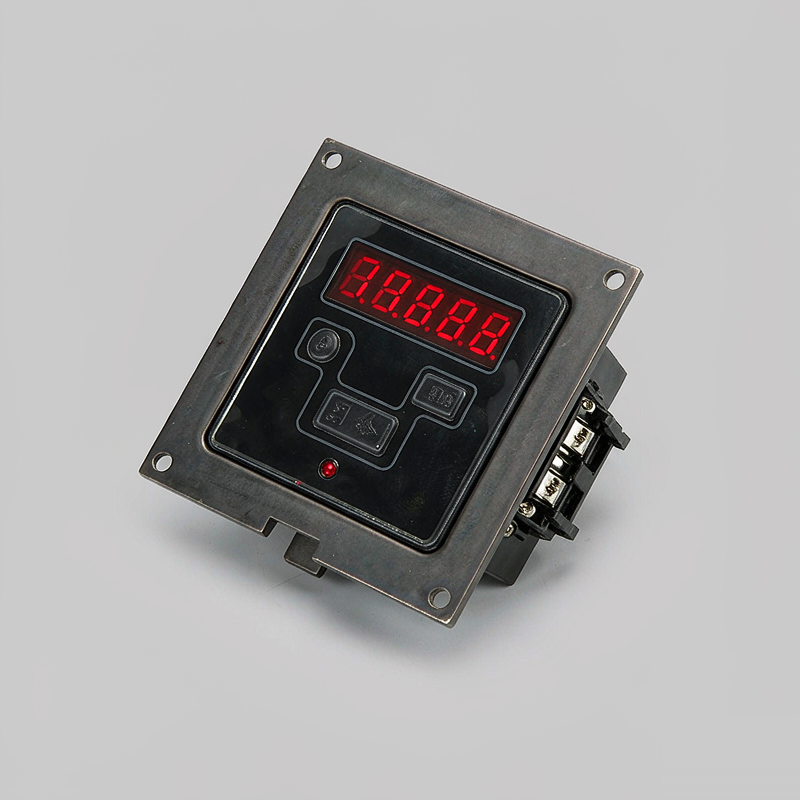
The front bezel is gasketed to IP65 and carries a red LED display, a sealed membrane keypad and status LEDs for zero, tare and stability. Behind it, a removable terminal block accepts excitation, signal, sense and shield wires for up to four cells, plus RS485, relay outputs and an optional 4 to 20 milliamp module. A wide range switched mode supply accepts either mains voltage or 24 volts DC, and all settings are retained in non volatile memory when power is removed.
The converter resolves better than one part in 100000 and samples at up to 100 readings per second, with selectable digital filters that suppress vibration without slowing a filling cycle to a crawl. Two point calibration with certified weights is supported, along with manual zero tracking and a gravity compensation value. Serial data uses a documented register map over RS485, and three configurable setpoints can drive tare, fill, over and under relays. Display increments, decimal position and units are fully configurable.
Use six wire load cell cable with the sense leads connected, and join multiple cells only through a proper junction box with trimming resistors. Ground the shield at the indicator end, keep sensor wiring away from contactor coils, and set the mains voltage selector before applying power. Warm the unit for fifteen minutes, then perform zero and span calibration with the mechanical platform installed. Record the filter level and setpoint values in the machine documentation.
The indicator ships with a terminal cover, a wiring label, a quick setup card and a calibration checklist. Analog output modules and extra relays are factory fitted because they occupy internal option slots. Front bezel labels, display units and setpoint defaults can be preconfigured for OEM machines. Matching junction boxes, load cell cable and a protective panel gasket are available as a kit.