Measuring pressure inside an extruder barrel means placing a diaphragm in contact with molten polymer while keeping the electronics far away from the heat. The MP-400 does this with a long rigid stem that separates the sensing tip from the amplifier head by a controlled distance. Stable melt pressure is a direct indicator of screen pack condition, screw performance and product consistency, so this sensor is often wired into both a display loop and a machine safety interlock.
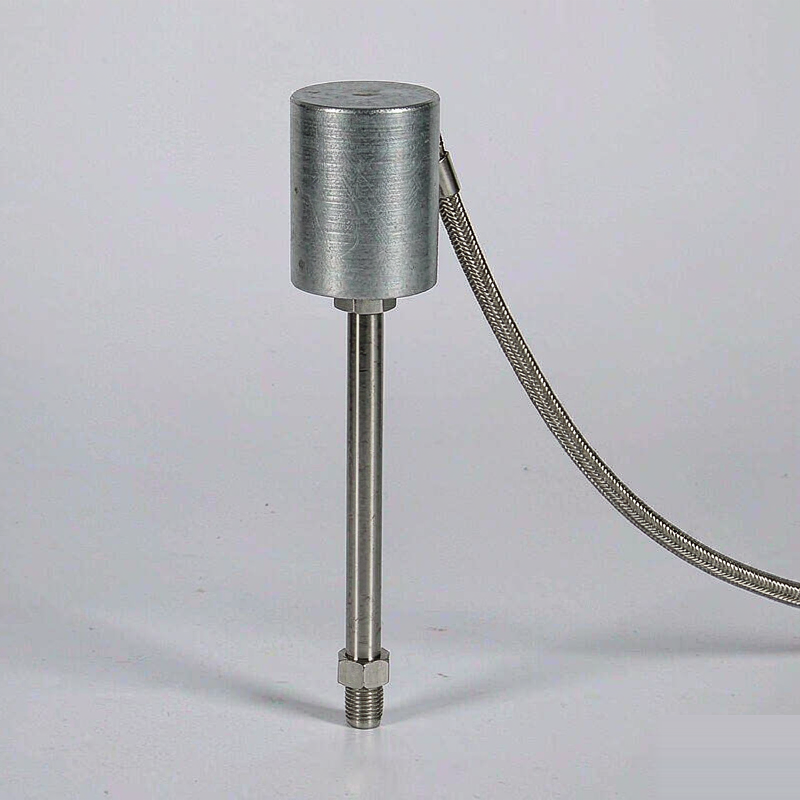
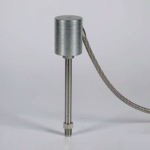
The tip carries a 316L diaphragm behind a standard 1/2-20 UNF threaded fitting that seats against a machined barrel bore. Pressure is transferred through a rigid capillary and a mercury free high temperature fill fluid to a strain gauge element in the upper housing. A flexible armoured version is offered where the installation needs a bend, and an optional thermocouple can share the same stem to report melt temperature. The head is stainless steel with a braided cable and a multi pin connector.
Ranges from 0 to 100 bar up to 0 to 1000 bar are available, with combined accuracy near 0.5 percent of full scale. The diaphragm tolerates continuous media temperatures up to 400 degrees Celsius while the electronics remain within minus 20 to plus 85 degrees Celsius thanks to the stem. Output choices include 4 to 20 milliamps, 0 to 10 volts and a digital RS485 variant, and the fast response captures screw passage pulsation. An 80 percent adjustable alarm setpoint can be used for overpressure shutdown.
Machine the barrel bore to the specified dimensions and clean it thoroughly before fitting; residue under the diaphragm seat causes a permanent offset. Tighten with the recommended torque using the hex flats only, never bend the rigid stem, and allow the barrel to reach full operating temperature before final zeroing. Remove the sensor while the polymer is still molten during shutdown, and protect the diaphragm with the supplied cap during storage. Verify the alarm setpoint against the machine limit.
A calibration report at five pressure points, a bore machining drawing and a protective diaphragm cap are supplied. Range, stem length, flexible or rigid construction and output type must be specified at order entry because the assembly is sealed at the factory. Spare sealing gaskets and a cleaning tool are recommended accessories. For multi line plants, sensors can be delivered with matched spans so a shared display reads consistently.